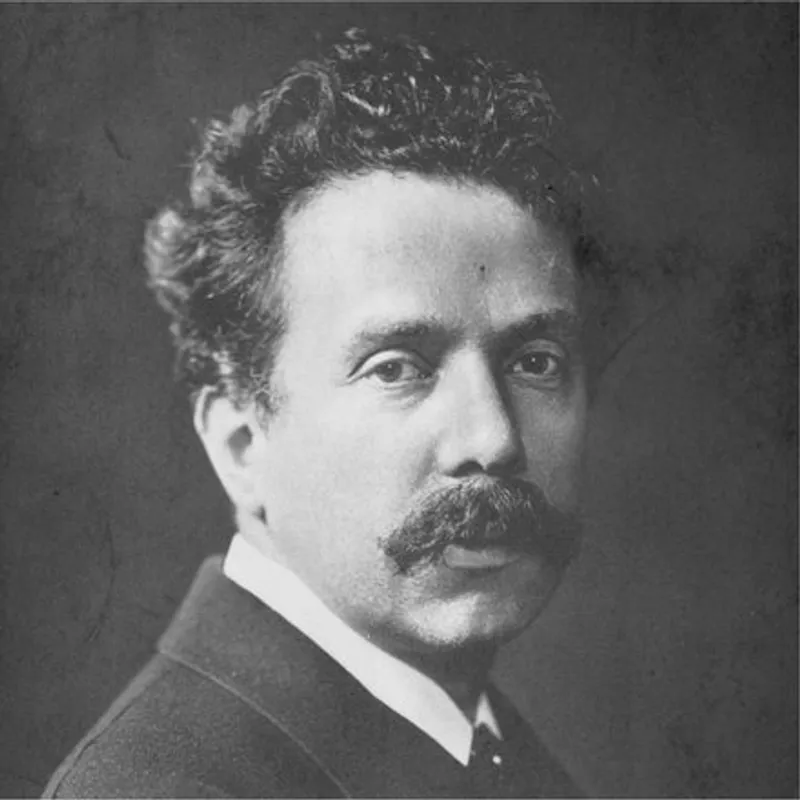
Robert Elliot Kahn is one of the principal architects of the Internet. Along with Vint Cerf, he invented TCP/IP—the protocols that enable computers around the world to communicate. His work on ARPANET and the open architecture of internetworking laid the foundation for the digital age.
Early Life and Education
Born in Brooklyn, New York in 1938, Kahn showed early talent in engineering and mathematics. He earned his bachelor’s degree from the City College of New York, followed by master’s and doctoral degrees in electrical engineering from Princeton University[1].
After completing his PhD in 1964, Kahn worked at Bell Labs and MIT before joining Bolt Beranek and Newman (BBN), where he would make his first major contribution to networking.
Building ARPANET
At BBN, Kahn was responsible for the system design of ARPANET—the first operational packet-switched network. He led the team that built the Interface Message Processors (IMPs), the specialized computers that routed packets between host machines. When ARPANET’s first four nodes went online in 1969, Kahn’s architectural decisions were at its core.
In 1972, Kahn joined DARPA (then ARPA) and organized the first public demonstration of ARPANET at the International Computer Communication Conference. The demo connected 40 machines and showed the world that packet switching actually worked[2].
Inventing TCP/IP
At DARPA, Kahn tackled a bigger challenge: how to connect ARPANET with other networks that used different protocols. Working with Vint Cerf, he developed the concept of “open architecture networking”—the idea that diverse networks could interconnect without requiring changes to their internal structure.
The result was TCP/IP, first described in their 1974 paper. Kahn’s key insight was that the protocol should be end-to-end: the network itself would simply move packets, while the endpoints would handle reliability and ordering. This principle—known as the end-to-end argument—became a cornerstone of Internet design that enables innovation at the edges.
CNRI and Beyond
In 1986, Kahn founded the Corporation for National Research Initiatives (CNRI) to provide leadership in the research and development of the National Information Infrastructure[3]. Under his leadership, CNRI developed the Digital Object Identifier (DOI) system, which provides persistent identifiers for digital content and is now used by publishers worldwide.
Recognition
Kahn’s contributions have been recognized with the highest honors:
- The Turing Award (2004, with Vint Cerf)
- The Presidential Medal of Freedom (2005)
- The National Medal of Technology (1997)
- Induction into the National Inventors Hall of Fame
Legacy
Bob Kahn’s work exemplifies how theoretical elegance can produce practical impact. His open architecture approach didn’t just connect existing networks—it created a framework for networks that didn’t yet exist. The billions of devices connected to the Internet today all communicate using the protocols he co-designed, enabling everything from email to streaming to global commerce.
Sources
- Internet Hall of Fame. “Robert E. Kahn.” 2012.
- Computer History Museum. “Internet History 1962-1992.” 2020.
- CNRI. “About CNRI.” Corporation for National Research Initiatives.