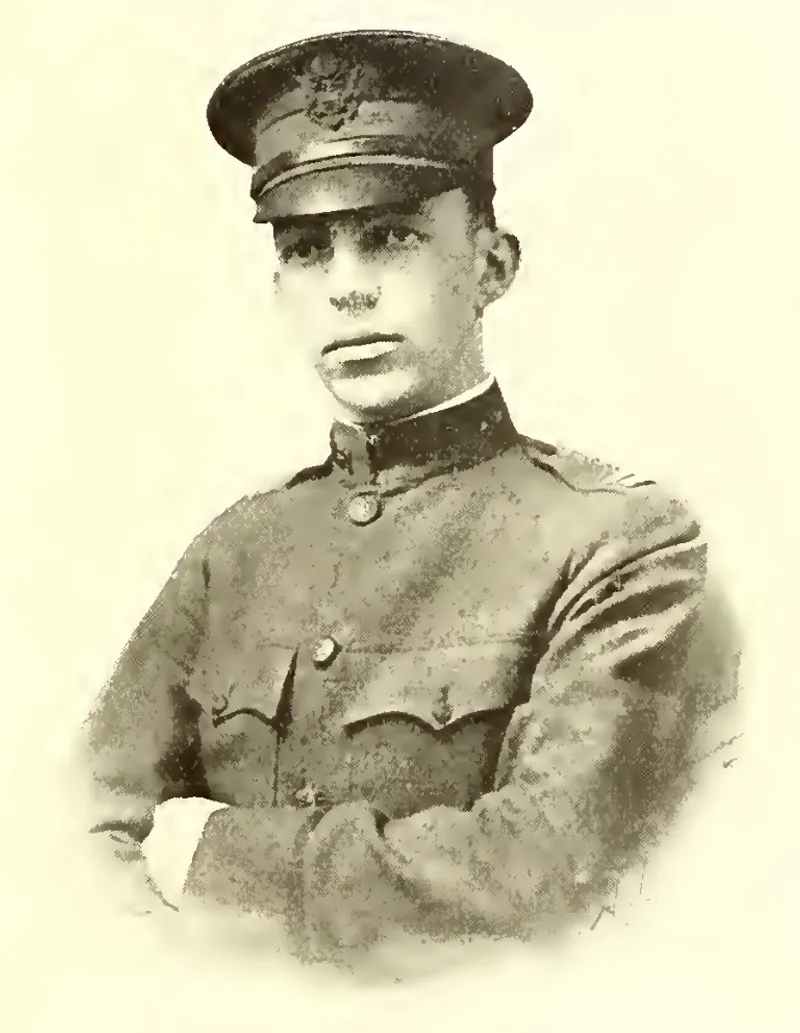
Edwin Howard Armstrong (1890–1954) was an American electrical engineer and inventor who developed three fundamental technologies that made modern radio possible: the regenerative circuit, the superheterodyne receiver, and frequency modulation (FM) radio. Despite bitter patent battles that overshadowed his achievements, he is recognized as one of the most important inventors in the history of radio.
Early Life and Education
Armstrong was born on December 18, 1890, in New York City. As a teenager, he became fascinated with radio after reading about Guglielmo Marconi’s transatlantic wireless transmission. He built his own wireless equipment, erecting a 125-foot antenna in his family’s backyard in Yonkers[1].
Armstrong studied electrical engineering at Columbia University, where he would later become a professor. It was in his junior year, in 1912, that he made his first major discovery.
The Regenerative Circuit (1912)
While still an undergraduate, Armstrong discovered that feeding part of a vacuum tube’s output back into its input could amplify radio signals a thousandfold. This “regenerative” or “feedback” circuit made it practical to receive radio signals loud enough to fill a room without headphones.
Armstrong also discovered that at maximum amplification, the circuit became an oscillator—a generator of radio waves. This principle remains at the heart of all radio and television broadcasting today[2].
The Superheterodyne Circuit (1918)
During World War I, Armstrong served as a captain in the U.S. Army Signal Corps in France. There, he invented the superheterodyne circuit, which converts incoming radio signals to an intermediate frequency for amplification and filtering.
The superheterodyne receiver dramatically improved radio selectivity and sensitivity. Today, virtually all modern radio receivers, televisions, and cellular phones use this approach—over a century after its invention.
Frequency Modulation (1933)
Armstrong’s greatest achievement was developing wide-band frequency modulation (FM) radio. While amplitude modulation (AM) encodes information by varying signal strength, FM encodes it by varying frequency.
FM offered revolutionary advantages:
- Static-free reception: FM is inherently resistant to electrical interference
- High fidelity: FM can reproduce the full range of audible frequencies
- Consistent quality: Signal strength variations don’t affect sound quality
Armstrong demonstrated FM to RCA in 1933, but the company, having invested heavily in AM infrastructure, saw FM as a competitive threat rather than an improvement. This began decades of corporate resistance to FM adoption[3].
Patent Battles and Tragedy
Armstrong’s life was marked by bitter patent disputes. Lee de Forest challenged his regenerative circuit patent in litigation lasting 14 years that reached the Supreme Court twice. Although the courts eventually ruled for de Forest, the scientific community never accepted this verdict.
Later, RCA and other corporations began using FM technology without paying Armstrong royalties. By the early 1950s, most of his wealth had been consumed by legal battles. On January 31, 1954, Armstrong—depressed and exhausted—took his own life at age 63.
Vindication and Legacy
After Armstrong’s death, his widow Marion won every patent suit her husband had fought, finally establishing him as the inventor of FM. The technology he created became the basis for:
- FM radio broadcasting worldwide
- Television audio
- NASA communications with Apollo astronauts
- Modern two-way radio systems
Armstrong received the first Medal of Honor from the Institute of Radio Engineers, the French Legion of Honor, the Franklin Medal, and the Edison Medal. He is remembered as “the most prolific and influential inventor in radio history.”
Sources
- Columbia Magazine. “Edwin Armstrong: Pioneer of the Airwaves.” Biography and early life.
- National Inventors Hall of Fame. “Edwin Howard Armstrong.” Overview of his inventions.
- Britannica. “Edwin H. Armstrong.” FM development and patent battles.