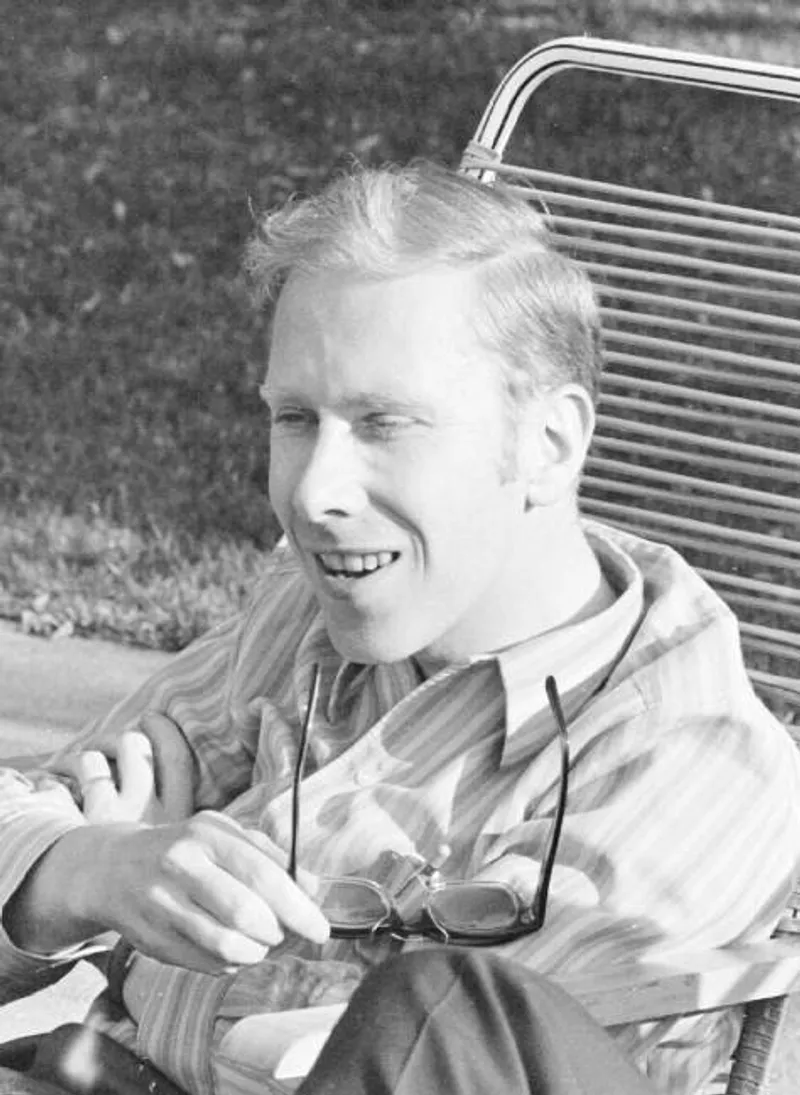
Niklaus Emil Wirth (1934–2024) was a Swiss computer scientist who designed several influential programming languages, including Pascal, Modula-2, and Oberon. Throughout his career, he championed simplicity in language design, arguing that elegance and clarity should take precedence over feature accumulation. His work shaped how programming is taught and how languages are designed.
Early Career
Born in Winterthur, Switzerland, Wirth earned his electronics engineering degree from ETH Zurich in 1959. He then pursued graduate studies at Université Laval in Canada and the University of California, Berkeley, where he earned his Ph.D. in 1963[1].
After working briefly at Stanford University, Wirth returned to ETH Zurich in 1968, where he would spend most of his career.
The ALGOL Influence
In the 1960s, Wirth contributed to the ALGOL 60 language committee and designed ALGOL W, an influential ALGOL dialect. This experience with language design committees—and their tendency toward complexity—shaped his later preference for single-designer languages.
Pascal (1970)
Frustrated with the complexity of languages like PL/I, Wirth designed Pascal to demonstrate that a language could be simple, elegant, and still powerful enough for serious work. Pascal enforced structured programming through its syntax, making it difficult to write spaghetti code[2].
Pascal became the dominant teaching language in universities worldwide. Its influence extended beyond education when Borland’s Turbo Pascal made it a practical tool for commercial development.
Modula-2 and Lilith (1978)
For the Lilith workstation project, Wirth extended Pascal with modules (for large-scale program organization) and low-level facilities (for systems programming). The result was Modula-2, which demonstrated that systems software could be written in a high-level language.
The Lilith system—hardware, operating system, compiler, and applications—was built entirely by Wirth’s group at ETH Zurich, showcasing vertical integration decades before Apple made it fashionable.
Oberon (1987)
After visiting Xerox PARC, Wirth designed Oberon by removing features from Modula-2 rather than adding them. He and Jürg Gutknecht built the complete Oberon system and published it with full source code, providing a transparent example of systems design.
Wirth updated Project Oberon in 2013 at age 79, implementing the entire system on an FPGA—demonstrating both the design’s timelessness and his continued engagement with the field.
Wirth’s Law
Wirth is remembered for “Wirth’s Law” (sometimes called Page’s Law): software is getting slower more rapidly than hardware is getting faster. This observation critiques the tendency to consume performance gains with bloated software rather than maintaining efficiency.
Philosophy
Throughout his career, Wirth advocated for:
- Simplicity: A good language should be learnable in days, its specification readable in hours
- One-pass compilation: Languages should be designable for efficient, simple compilers
- Conceptual integrity: Better to have one designer than a committee
- Education: Languages should teach good practices, not just enable any practice
Legacy
Niklaus Wirth died in January 2024. His languages educated millions of programmers, and his philosophy of simplicity influenced designers from Borland to Google. In an era of ever-expanding language features, his work stands as a reminder that less can be more.
Sources
- Wikipedia. “Niklaus Wirth.” Biography and career history.
- ACM Turing Award. “Niklaus Wirth.” Turing Award citation and accomplishments.